
After Chavez, the Flood?
Haroldo Dilla Alfonso*
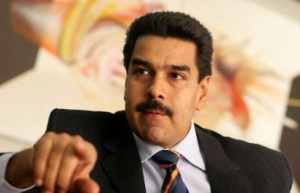
HAVANA TIMES — Since the times of Romulus and Remus, political communication has operated on two pillars: bread and circuses. The bread is for the stomachs, and the circuses for the hearts. This is known by all politicians, even if they don’t know who Romulus and Remus were.
And of course this must be known by Venezuelan Vice President Nicolas Maduro, so I imagine he must be trying to figure out how much bread will have to go around with the likely demise of Hugo Chavez, the charismatic leader of the so-called Bolivarian Revolution.
The problem is that Maduro will have to negotiate (which is to say distribute more bread) at a moment when the economic situation in Venezuela isn’t exactly encouraging. The price of oil appears to have stabilized at a level lower than $100 a barrel figure that Chavez considered fair and necessary to fund his continental project.
On one hand, he’ll have to distribute more bread in the direction of the poor, which has been Chavez’s quintessential social base. But it’s a social base in the process of erosion, as indicated by the recent election results in which Chavez — with lots of money and as the office holder — won by a much smaller margin than his previous victories.
On the other hand, Maduro will also have to distribute among the fractious and heterogeneous pro-Chavez elite, where there’s everything from the military, old converted politicians, former social activists and believers to mere fortune seekers.
It’s an elite in which the VP was nothing more than a secundus inter pares and whose centrifugal tendencies will fly apart even before the tears are dry in front of the leader’s coffin.
This is why I think that if Maduro (or whoever becomes the successor) isn’t suicidal, he will be forced to moderate his international approach, both by restraining criticisms against the US and in reducing support to international allies and the blocs of self-interested partisans, such as PetroCaribe. In this way he will have more resources for the domestic political game.
A retraction, even a partial one, of Bolivarian hyperactivity will reverberate in the depolarization of the Caribbean and Latin American theater, and in the creation of a better scenario both for Obama’s unworried olicies as for active Brazilian diplomacy.
The resulting impact on Cuba (a key piece of this geopolitical game) is predictable. Whatever the post-Chavez outcome in Venezuela, Raul Castro — who long ago lost the resource of the charismatic circus — will have to expect worse conditions than those that are currently maintaining him in power.
Even if Maduro manages to stay in office, he will be forced to redefine the country’s relations with the island and obviously pay less. Cuba’s finances — with the Scarabeo oil rig coming up empty handed — cannot take any additional pressure, meaning any reduction in subsidies will cause great hardship.
It’s therefore predictable that if Raul Castro and his inner circle haven’t lost touch with reality, and if they actually want to do what they’ve always shown themselves wanting to do (retain power), they will have to obtain some access to the US market, which will mean accepting the condescending gesture that Obama is holding out.
And of course, they will have to bite the bullet and take more effective steps to attract foreign capital, which presently are available through two principal means: remittances and foreign investments.
Raul Castro’s problem isn’t that he isn’t moving, obviously he is; his problem is that he’s not getting into the thick of things. He’s always wandering around on the margin of what’s really important. This is why he continues to have a centralized economic system in which every step essential for the market seems like a delivery using forceps.
It has taken six long years to understand that farmers need to live on their farms, and that emigration constitutes the most profitable business of the Cuban economy.
I think he still hasn’t come to understand that fresh capital is needed to jump-start an economy that is creaking under the weight of its inefficiencies. It needs large and small capital, for all of these to help in that huge financial hole that is the Cuban economy.
Probably with this contingency he’ll manage to understand, and in passing he’ll comprehend that he has no other choice but to put aside his arrogant slogan “without pauses but without haste,” and start advancing with more haste (although in the rush he’ll have to leave behind his antiquated bureaucracy, symbolized by his seedy vice president [Jose Ramon Machado Ventura].
In the end, Chavez with his subsidies was an unexpected black swan that paralyzed the economic reform that was implemented since the early ‘90s. This gave Fidel Castro the opportunity to engage in his last monumental works that contributed to further economic dilapidation before leaving office suffering from diseases, senility and delusions.
Although in politics you never know exactly everything, nothing indicates the appearance of another black swan with the vocation and money to subsidize a revolution that no longer exists and a socialism that never existed.
—–
(*)This commentary was originally published in Spanish by Cubaencuentro.com.
45 Tonnes of Drugs Confiscated in Venezuela in 2012
By TAMARA PEARSON
Merida, December 21st 2012 (Venezuelanalysis.com) – This year Venezuelan security forces have confiscated a total of 45.084 tonnes of drugs nationwide the minister for justice and internal affairs Nestor Reverol informed as he presented the National Anti-drug Office’s (ONA) end of year report.
The figure is 3 tonnes higher than the amount of drugs confiscated in 2011, almost double the amount confiscated in 1999 (25.52 tonnes), but lower than the peak year of 2005, when 77.53 tonnes were confiscated.
Of the total confiscated this year, 27.12 tonnes, or 60.15% was cocaine, and 17.85 tonnes, or 39.58% was marihuana. 76.65 kilos (0.17%) was crack, 30.16 kilos (0.07% was heroine, and 14.67 kilos (0.03%) was basuco (cocaine paste).
According to Reverol, 9,692 people were arrested during the drug confiscations, 220 of which were foreigners, from 23 different countries. Of the Venezuelans, 8,815 were men and 657 were women, while of the foreigners, 196 were men and 24 were women.
The minister also pointed out that since 2006, 95 drug lords have been captured, including 20 this year. Of the 95, 72 have been deported to other countries, 12 are in prison in Venezuela, and 11 are going through proceedings to be deported. The countries where most drug lords have been deported to are Colombia (33), United States (21), and Holland (4).
The ONA has carried out 53,450 activities that aim to inform about and prevent drug use, Reverol said. Many of these activities or training programs were aimed at communal council spokespeople or education workers.
Venezuela is also the “second country in the world” to offer free rehabilitation treatment to drug addicts, something which privately could cost up to BsF. 90,000 (US$20,900) per month, Reverol said. Public services available include 56 Family Orientation Centres, 14 Integral Attention and Prevention Speciality Centres, and 50 Socialist Therapeutic Communities, which this year assisted a total of 7,700 patients.
In 2005 president Hugo Chavez decided that Venezuela would suspend its cooperation with the US Drug Enforcement Administration (DEA), accusing it of being engaged in espionage and drug trafficking.
The US government regularly accuses the Venezuelan government of not collaborating in the fight against drug trafficking.
I understood your question.
I usually take what the US State Department has to say with a grain of salt in most cases and more so when it comes to Venezuela, that is not to say that their is no corruption in the higher echelons of the military and if we are to believe the statements of the military they would side with the people, if not it won’t be Nicolas Maduro from what I understand and there are numerous former military within the bureaucracy and in the electoral sphere .
Venezuela will probably follow the same course its on now if not more so and the drug trade has little to no baring.
Cort, …that didn’t answer the question about the role the drug trade will have in the post-Chavez power struggle. I’ve seen the reports about Venezuelan police arresting drug traffickers. I’ve also seen reports about some Venezuelan military officers being involved in the drug trade.
“In September, (2009) the Treasury Department’s Office of Foreign Assets Control designated three Venezuelan high-ranking officials, all close aides to Chávez, as “drug kingpins” for protecting FARC drug shipments and providing arms and funding to Colombian guerrillas. They are Hugo Armando Carvajal Barrios, director of the military’s Intelligence Directorate; Henry de Jesús Rangel Silva, head of the Directorate of Intelligence and Prevention Services; and Ramón Rodríguez Chacín, former interior and justice minister.”
http://www.washingtonpost.com/wp-dyn/content/article/2009/07/18/AR2009071801785.html
So the question remains, to what extent will the control, or suppression, of the drug trade figure in the post-Chavez power struggle?
Venezuela at times has been used as a transit point by some with ties to the Colombian death squads FARC, some are involved within the military, oligarchy, police, some indigenous and poor farmers. As far as is known little is in production.
The government has increased programs for interception, even the UN says its done a good job.Venezuela has not really had cooperation with the US DEA since 2005 and I can understand why.
The Venezuelan government has deported three fugitives wanted on narcotics trafficking charges to the United States during 2011: Gloria Rojas Valencia, Lionel Harris, and Maximiliano Bonilla Orozco, aka “Valenciano”, one of Colombia’s most-wanted drug traffickers captured in Venezuela in November and deported in December and they have sent some back to Colombia also..
The Venezuelan government continued to permit USCG boarding of Venezuelan-flagged vessels on the high seas suspected of being engaged in narcotics trafficking. During 2011, the Venezuelan government cooperated with the USCG in three maritime drug interdiction cases, compared to nine cases in 2010.
The Venezuelan Navy or Coast Guard has made some at-sea drug seizures on its own as also has the military and police.
Cort,
You seem very well informed about the situation in Venezuela. To what extent do you think control of the cocaine trade will figure in the post-Chavez power struggle?
I will say you are partly correct in that there are economic problems, mismanagement, corruption in many industries for many reasons and that the Boli-bourgeois have influence within the bureaucracy and some just trying to make a buck off the revolution, taking out bad loans from the Chinese, Russian, Iranian capitalists, banking making a mint from duel and devalued currencies and other problems.
But I would say the world economic crisis is the primary reason and contradiction, along with the major levers of society and power such banking, major industries, big corporations are still in the hands of capitalists.
Venezuela is still a capitalist country, on path to socialism that is being blocked, sabotaged and held back by many in the bureaucracy.
Cort
Cort,
It doesn’t matter whether Maduro becomes a candidate for president or not. The same economic challenges pertain to Venezuela: a stagnating economy & rising corruption. Whoever leads the government post-Chavez will have to deal with those problems too.
As for Chavez’s health: the reports that he is “recovering” from the recent surgery in Havana should not be read too optimistically. The purpose of the surgery was to deal with lesions which had developed as a result of his last round of treatments. The cancer is still present and the end is unavoidable. It’s really only a matter of time.
As for how this will effect Cuba, it is clearly of sufficient importance to the Cuban government that they have hundreds of “advisors” in Venezuela now, helping to make sure that whoever succeeds Chavez will remember to keep Cuba’s interests in mind.
and for a better analysis of the recent election in Venezuela where you missed the boat, one can go several articles from the site Venezuelanalysis or from Jordi martin below which only part is posted, read the whole thing its well worth it…
Venezuela regional elections: PSUV candidates win 20 out of 23 states
http://www.marxist.com/venezuela-regional-elections-december-2012.htm
However, it would be dangerous to fall into empty triumphalism. Not all is well in the Bolivarian camp. As we have warned before, there has been a growing current of discontent among the revolutionary masses against the bureaucracy and the reformists within the movement. This was particularly the case with the way candidates for governors were chosen: from above, without any involvement of the rank and file.
In a number of states we have already seen governors elected as “revolutionaries”, with the support of president Chávez, jumping over to the opposition (in Lara, Amazonas, Aragua, Monagas, etc.). In the case of the Andean state of Trujillo, the “Bolivarian” governor Cabezas had become so unpopular that he had to be removed as a candidate by president Chávez as there was a near uprising amongst the revolutionary masses in the state when the decision was announced. The new PSUV candidate, Rangel Silva was seen as closer to the will of the people and got an amazing 81% against the opposition’s 17%.
This discontent led to credible alternative revolutionary candidates standing in 6 states, all of them supportive of president Chávez and the Bolivarian revolution, but to one degree or another to the left of the official PSUV candidates. Four of them stood on the Communist Party ticket, although the PCV supported the PSUV candidates in all other states. In different states these PCV candidates were supported by various other forces, like the Tupamaros, the Venezuelan Revolutionary Current (CRV), etc. In the Andean state of Mérida, the former state governor Porras got a respectable 10% of the vote, in Amazonas, Gregorio Mirabal got a modest 5%, while in Portuguesa, the alternative PCV candidate got 24% of the vote relegating the opposition candidate to third place (with 21%).
As well as the PCV candidates, other alternative Bolivarian candidates stood in Apure, where the MEP-Tupamaro candidate got 14% and in Falcón, where Oswaldo R. León received 11% of the votes.
Perhaps the most significant challenge from the left to an official PSUV candidate was that in Bolivar, the southern state home to the state-owned basic industries (aluminum, steel, etc). Here, the PCV stood Manuel Arciniega who received just over 8% of the vote. He was seen as the candidate standing for the workers of the basic industries and their experience of worker’s control, as against the incumbent governor, Rangel Gómez who has played a key role in destroying the Plan Guyana Socialista and in removing the worker-presidents in these companies. He was also one of those opportunist turncoats who during the April 2002 coup briefly sided with the opposition while it seemed it had the upper hand, only to swear loyalty to Chavez and the revolution once the coup was defeated by the masses.
Yes, it is indecent to a degree to hold a discussion of this sort while there is still hope, however feeble, that Chavez will survive. However, it is no more indecent than Chavez’ ego and lust for power, A ‘decent” head of state would have resigned to allow for a calm and peaceful transition. That said, it sounds like I may agree with you Cort Greene. No one in Venezuela believes that Maduro is capable of holding the Chavista coalition together. In fact, his primary role within the movement was one of enforcer. Now, as a placeholder for Chavez, Maduro is ill-equipped to reach out to the same groups he was previously asked to chasten. Outside of the movement, Chavez’ leadership served as a guidepost to other nascent progressive movements as to direction and tone. Heir apparent Correa in Equador lacks the resources and fiery rhetoric to carry the torch. Intellectual midgets like Morales in Bolivia and Ortega in Nicaragua are not up to the challenge either. Further justification that the current US policy of “wait ‘n see” is the right policy for Cuba and Latin America.
To begin with, this is mere speculation if Nicolas Maduro with be a candidate for president for several reasons.
President Chavez is still alive and is recovering, so he may or may not complete his term.
The Bolivarian bureaucracy has many different factions within it, Nicolas Maduro represents part of what is know as the “endogenous right” and in cohoots with a segment of the Boli-bourgeois and capitalist roaders and he may not evolve from the faction fight within the bureaucracy..
The grassroots and rank and file miltants of the revolution despised the bureaucracy , for those who don’t understand there are 10,000 of organiztions of the grassroots and many workers organizations are upset that the revolution to real socialism is being held back by the bureaucracy. These comrades are the revolution, not the bureacracy and they have come to the rescue of it on many occasions in the last decade.
And they wouldn’t give up without a fight!
Rojo Rojito
Cort
La designación de Nicolás Maduro, triunfo definitivo de la derecha endógena
Francisco Sierra Corrales – http://www.aporrea.org
12/10/12 – http://www.aporrea.org/ideologia/a152136.html