
Cuba’s Antonio Rodiles Is Not Innocent
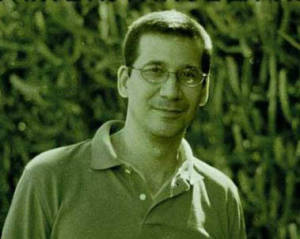
Haroldo Dilla Alfonso*
HAVANA TIMES — The imprisonment and persecution of Cuban activist Antonio Rodiles has broken the chain of short-term express arrests that had typified the new Cuban government’s methods of repressing the opposition.
It all started a couple of years ago when the government released over a hundred political prisoners and encouraging the vast majority of them to leave the country. Since then, the circle around Raul Castro has renounced spectacular raids and subsequent judicial farces such as those that took place that sad spring (2003).
In its place began a new approach of selective harassment and arrests for several hours as a way to achieve — at the lowest cost — what they failed to accomplish in 2003: the annihilation of the opposition.
Cuban security agencies are well aware that no one is farther away from being a terrorist than Antonio Rodiles, and that his activities are fully transparent.
Although always a brave and honest communicator, Rodiles is a dangerous person to a system that makes information sequestration and opacity a vital condition for its operation.

If he had confined himself to the valuable online discussions of the Estado de SATS audiovisual project, it’s possible they may have tolerated him.
As long as the Cuban government keeps society excluded from the Internet, an activity like his is inevitably limited in scope.
But Rodiles took some steps that tripped off the alert system. One of these was to convert his own residence into a center of opposition activism, as happened with the Click Festival.
Another was promoting a citizens mobilization initiative that asked the Cuban government to adhere to international human rights covenants.
And finally, responding to the case of the imprisonment of a young opposition activist, he had the audacity — which a dictatorship never forgives of its citizens — to take to the streets in protest (and what was worse in their eyes was that he did so across from a police station).
For months, Rodiles was subjected to an infamous smear campaign by whatever poorly-paid government blogger that was available. Now Rodiles is being jailed and subjected to a legal process for being consistent and for advancing a political struggle that has inevitably moved to the street, as it should and as it has the full right to do.
He is charged with resisting arrest, and for that reason was manhandled, during which his clothes were torn and his glasses broken. The fellow dissidents with him allege that his assailants were police, though all were in civilian clothes.
If this was the case, the offense and abuse are even greater. But I must say that if at any time Rodiles did indeed resist arrest, then that doesn’t diminish his stature or detract from his cause.
Resistance to illegitimate violence is a right of the people, for several centuries, and I don’t think we should give it up. If Rodiles was guilty of resisting, I think he deserves all the respect and support for doing what many have done in the nation’s history.
These has been a continuing theme since the distant days when Jose Antonio Aponte organized slave conspiracies, and when independence leader Carlos Manual de Cespedes organized his own conspiracies in Demajagua, and when poet Ruben Martinez Villena broke with his verses to organize a general strike, and when Frank Pais enlisted in the underground resistance to fight against another dictatorship.
Ultimately, Rodiles is not innocent. He’s guilty of using his only resources — dignity, courage and talent — to confront the oppression of a dictatorship that for a long time has known no moral standards.
His is a kind of guilt that the oppressors don’t forgive, one that not all of us can reach. He is guilty of aiming high. Therefore the minions are becoming desperate and are cowardly whispering, hiding their most prosaic fears behind the rubble of alleged high principles.
—–
(*) A Havana Times translation of the original published in Spanish by Cubaencuentro.com.
“Now can you clarify what you mean in your statement “show me evidence of a Cuban in a ‘pau-de-arara’ then we’ll speak about violence.” as it relates to Antonio Rodiles?”
Well, there’s nothing to ‘clarify’. If you still don’t understand after what I explainded what a ‘pau-de-arara’ is and how it’s still used by our poorly-prepared, outdated and brutal military police, then it is your problem and I can’t do nothing about it.
Again I ask Louis!
Now can you clarify what you mean in your statement “show me evidence of a Cuban in a ‘pau-de-arara’ then we’ll speak about violence.” as it relates to Antonio Rodiles? And please, no more bad USA in order to change the subject which is Rodiles, Cuba and Human Rights!
Funny as you only translated the term and did not answered the substance of it. Wikipedia (surprisingly) has a good definition for it:
“Pau de arara can also refer to a physical torture technique designed to cause severe joint and muscle pain, as well as headaches, and psychological trauma. The technique consists of a tube, bar, or pole placed over the victim’s biceps and behind the knees while tying the victim’s both ankles and wrists together. The entire assembly is suspended between two metal platforms forming what looks like a parrot’s perch.
This technique is believed to originate from Portuguese slave traders, which used Pau de arara as a form of punishment for disobedient slaves. Its usage has been more recently widespread by the agents of the political police of the Brazilian military dictatorship against political dissidents in the 1960s and 1970s and is still believed to be in use by Brazilian police forces,[1] although outlawed [2]. The device was often used as a restraint for a combination of other torture techniques, such as water boarding, nail pulling, branding, electric shocks, and sexual torture.”
[1] Caldeira, Teresa P.R. (2000). City of Walls. Crime, Segregation, and Citizenship in São Paulo. Berkeley: University of California Press. p. 109. ISBN 0-520-22143-5.
[2] ^ [1]
And guess what? The “water boarding, nail pulling, branding, electric shocks, and sexual torture” part was all ‘kindly’ taught by the CIA in its (un)famous School Of The Americas. BTW, I recently heard a story of a young boy being tortured with this technique in the northern region of my country.
That’s one of the reasons I got really upset with Moses earlier, when he said that “The American people, from the sweat of our brow, continue to foot the bill to defend freedom all over the world.” Yes, it’s that offensive.
Lets hear from the man himself, Antonio Rodiles in his own words!
ALJAZEERA VIDEO: Cuba dissidents Ladies in White & Antonio Rodiles @ 8:50 minutes
http://www.youtube.com/watch?feature=player_embedded&v=XgylqDUh5-I
Again I ask Louis!
Now can you clarify what you mean in your statement “show me evidence of a Cuban in a ‘pau-de-arara’ then we’ll speak about violence.” as it relates to Antonio Rodiles?
“Again I never said that he should be in prison.”
Are you evan able to read? Or you can read but cannot interpret what you’re reading? Whew… rabid ‘good vs evil’ trolling is easy, huh?
BTW, I’ll repeat what I said to Humberto: show me evidence of a Cuban in a ‘pau-de-arara’ then we’ll speak about violence.
Luis! I thought thought you were bothered by someone posting in Spanish and here you are posting “Pau de arara” a Portuguese term that literally translates to “parrot’s perch”.
Now can you clarify what you mean in your statement “show me evidence of a Cuban in a ‘pau-de-arara’ then we’ll speak about violence.” as it relates to Antonio Rodiles?
He is in jail because he criticized the Cuban government. That’s a crime in Cuba. It’s not a crime in my country, Canada, nor is it a crime in the US or wherever you live, Luis. This is a consequence of two factors: the inability of Marxist dictatorship to accept anything less than a monopoly of all political activity, and the narcissistic reaction of the dictatorship to any and all perceived insult or disobedience. For 53 years in Cuba it has been an unforgivable sin, a crime punishable with prison, torture, beatings and execution.
Sure. That’s why the Cuban Socialist “New Man” turned out so well!
‘Human nature’ BULLSHIT.
The only human nature there is is the one that drives us to breathe, eat, drink, sleep, expel toxic substances from our body and reproduce.
We are social beings, therefore we – in a wonderfully paradoxical manner – are PRODUCTS of our environment of existence at the same time we BUILD this same environment.
I said I cannot WRITE in Spanish. I told him to look at my response above.
His show in on TV Marti for goodness’ sake. And in a country ‘where’s there’s no internet’ I ask: how is someone capable of uploading 30, often 50 minute long videos? Anyone who’s ever used dial-up knows you must be very lucky do to something like this without having the connection lost.
The only search results that came back are the ones like yours, baseless accusations without a shred of evidence.
Grady,
Evil exists in the human heart, not in the system. That is why no matter how hard people may try to design and build a “perfect” society, the project is doomed to fail. Any system, be it capitalist or socialist or some magical mixture which you advocate, will cause human suffering because the people in power will succumb to their evil side. The only workable systems, that is, the least bad systems, are those in which the powerful are constrained by the rule of law, the individual rights of the people are respected, and there are limits on the extents and exercise of power.
Gabriel wrote:
“That is a charge that you have to try. If the government has evidence of that accusation, accusing Antonio would not be resistance to an arrest, but in collaboration with the enemy.
In other words: if that were true why would accuse Rodiles only resisting a false arrest?”
Google translate is a wonderful thing, isn’t it?
Easy man, sometimes people make a mistake and post on the wrong language of the site unintentionaly.
Gabriel you coward. Speaking in Spanish when you know I cannot write in Spanish.
Anyway see the response to Moses above.
Again I never said that he should be in prison. On the contrary, I hope that he’s released soon. I just pointed out that he’s not as ‘independent’ or ‘pure’ as one should imagine though this article.
Luis, is he being accused of the government for being part of Radio Marti? No. So are we to assume you support him being charged for the above stated acts? If so, then you are a very cruel human being.
And you spit the same old White House propaganda 100% of the time.
Anyway, remember when we were talking about ‘proof’ about Elaine’s reason to abandon her blog and I asked you proof that she has been pressured and you replied that you had no ‘CSI and stuff [proof]? No’. Well at least a quick google search show us that there IS a connection between Rodiles’ show and TV Marti. And this information does not come from any ‘poorly-paid government blogger’. Everything we know about him right now is a monopoly from Mrs Y’s mouth. And she’s an intellectual fraud as we can see from her interview with Salim Lamrani. I don’t trust her.
About being ‘less true’. Straw-man. I never said that he’s a liar.
Come on. A quick google search with the keywords “Antonio Rodilles” and “TV Marti” shows us that there is a connection between the two. It’s a secret to nobody.
BTW, show me evidence of a Cuban in a ‘pau-de-arara’ then we’ll speak about violence.
Esa es una acusación que hay que probarla. Si el régimen tuviese pruebas de esa acusación, no estaría acusando a Antonio de resistencia a un arresto, sino de colaboración con el enemigo.
Dicho en otras palabras: si eso fuese cierto ¿por qué estarían acusando a Rodiles solo de resistencia a un arresto ilegal?
Paul,
Antonio Rodiles tiene derecho a opinar como le de la gana y a expresar su opinión.
Dicho en otras palabras: las personas que no tienen las mismas opiniones políticas que tú no tienen menos derechos que quienes tienen tus mismas opiniones políticas.
Si fueses un cubano patriota defenderías los derechos de los cubanos sin importar sus opiniones políticas.
I seldom share your views or agree with you but you usually seem to express orignal thinking. I enjoy reading at least tha much about your comments. But this time you have stooped to using the same old tired rhetoric that the robots in Cuba spew. Where is your proof that he is paid by Radio Marti? Have you seen a copy of a pay stub or a list of paid dissidents with his name on it. Don’t undermine your otherwise valid statements reflecting often incorrect but legitimate points of view with useless Castro bullsh*t. Besides, even if he were on the payroll of Radio Marti does that make his statements any less true? In the US and Brazil, no one is so noble to be completely without some measure of corporate influence. Tell me you don’t like Nike more than Adiddas or Coke more than Pepsi (you get the point). Does that disqualify you from having a valid opinion about tennis shoies or soft drinks?
Luis ! Can you provide a link to proof that Antonio Rodiles is being paid by Radio Marti?? These kinds of statements need proof otherwise is defamation, calumny or a Cuban “chisme” (gossip)!
DEFAMATION—also called calumny, vilification, traducement, slander (for transitory statements), and libel (for written, broadcast, or otherwise published words)—is the communication of a statement that makes a claim, expressly stated or implied to be factual, that may give an individual, business, product, group, government, religion, or nation a negative or inferior image. This can be also any disparaging statement made by one person about another, which is communicated or published, whether true or false, depending on legal state. In Common Law it is usually a requirement that this claim be false and that the publication is communicated to someone other than the person defamed (the claimant).[1]
INNUENDO: is an insinuation or intimation about a person or thing, especially of a disparaging or a derogatory nature. It can also be a remark or question, typically disparaging (also called insinuation), that works obliquely by allusion. In the latter sense, the intention is often to insult or accuse someone in such a way that one’s words, taken literally, are innocent.
Antonio Rodiles was part of this group’s arrest and was subject to the same violence and human rights abuses!
YOUTUBE: Video of when Yoani Sanchez was arrested along with Ángel Santiesteban.
http://www.youtube.com/watch?feature=player_embedded&v=qVo8Kb5c5ic
The legal institution of private property rights is not what is evil. It is evil when existing enterprises are owned by absentee capitalists, not the workers.
It is also evil however when the well-meaning socialist state holds ownership of enterprises, and then relates to wage and salary workers in much the same way as an investor-owned corporation would relate to them. This erroneous formula for socialism undermines productive incentives, lowers job satisfaction, and requires top-down bureaucratic management.
Workable socialism must value and utilize private property rights, but it must ensure that peasants own the lands they till, and that working associates are the primary owners of significant industry and commerce through proven, cooperative corporate structures.
But I wonder whether the private property that Antonio Rodiles idealizes is the democratic, cooperative kind, or the parasitical, undemocratic, non-cooperative kind of capitalists and landlords.
Individual wealth is the foundation of public good. The Cuban revolution has succeeded in impoverishing the entire Cuban nation, save for a select few who control the state enterprises. The bucks don’t trickle down in Cuba, that’s for sure. The regime has arranged the game so the bucks always flow up.
Rodiles’ words are a mortal threat to the regime, and all the power and wealth it controls. That is what he is guilty of.
He is a poorly-paid activist from Radio and TV Marti. Surely, he’s no innocent.
Democracy? Great!
But let’s be very clear what Rodiles’s code words really mean when he says:
“The main thing is that Cubans should have the ability to own their own property and be able to use it, trade it, and that the state functions more like a referee and not as an entity that controls the entire society.”
It’s a kinder and gentler version of another loser — Mitt Romney.
It’s capitalist restoration focusing on individual wealth at the expense of public good (the bucks don’t trickle down).
Come on. Honesty is politics is a sign of strength. Rodlies is not as “high aiming” as vacillating Mr. Dilla would have us believe.
If only there were 100 more Antonio Rodiles to face down the Castros and their totalitarian regime. My mother faced down Alabama firehoses and Mississippi police dogs in the 1960s so that her son would have a better life. I hope the path for freedom in Cuba comes at a lesser price.