
As Cuba Decides: A Look at Mao’s and Deng’s China
By Isidro Estrada
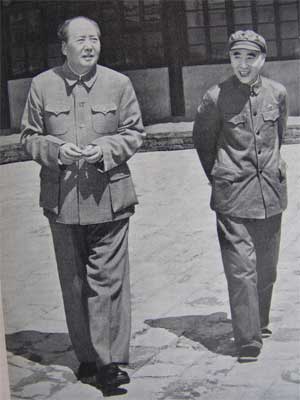
HAVANA TIMES – My colleague Pedro Campos recently published an article in this space, in which, it seems to me he has lined up for battle his entire arsenal of theoretical weaponry to challenge the economic model that prevails today in China.
I would like to make it clear that I am not going to make a categorical defense of the precepts on which this model is based; far from it, since much of what Pedro says is true as regards the original sins committed in its name.
But on reading his impassioned attack on “Chinese capitalism,” I notice he forgets to mention certain historical facts indispensible for a non partisan and healthily balanced viewpoint.
Having lived for over fifteen years in China, I believe I have learned a thing or two in that respect.
Firstly I would like to point out that in his zeal to demonize the “market socialism” currently operating here, Pedro almost sanctifies the Maoist period, presenting the changes made under the leadership of Deng Xiaoping as a virtual, trumped up betrayal of what the Chinese have deemed (and still refer to as) Mao Zedong Thought and which at divine moments became a quasi state religion of a type the ayatollahs of Iran would readily have applauded for its dictates.
Nor does taking sides in favor of Mao to the detriment of Deng help elucidate how and why China followed the path of change it did in the course of over three decades. The most positive result of which – ignoring for a moment its earlier mentioned transgressions – has made it into the second biggest economy in the world.
Nor is a balanced view encouraged by categorically claiming that Deng was “sanctioned during the life of Mao Zedong for pro-capitalist deviations,” because at the basis of the prolonged Maoist political purge, in essence a corrective chastisement, there was much more than mere rejection of the “enemy “system.
Retaliation against people like Deng took the form of a manhunt for the “disaffected” beginning with the Anti-Rightist Movement of 1957 and only ending in 1976 with Mao’s death, coinciding with the end of the traumatic period of Cultural Revolution which the Great Helmsman himself unleashed in 1966.

Rather than procure the purity of socialism (as it appeared on the surface), Mao and his cohorts committed the unspeakable for nearly two decades, removing from circulation anyone with a modicum of vision opposed to his disastrous collectivist policies and his hyper-ideologized campaigns, all of which proved disastrous in the end.
And to this end Mao shamelessly exploited the personality cult which exalted him to the level of yet another emperor (and I do not exaggerate), in a position to place himself above every authority in the land including the Law and the Party, and from where he could dispense punishment and pardon as he saw fit.
By 1976, when the Great Leader died, China was on the verge of total economic paralysis. The “biological solution” arrived in the nick of time, offering the most moderate wing of the Communist Party the opportunity to offload the most recalcitrant Maoists, whose efforts – especially during the Cultural Revolution – had placed the country on the brink of civil war, willfully destroying in their path the social and cultural fabric of ancient China at the same time as they endangered the very survival of a Party that these same extremist groups claimed to defend.

The reformers (and others less reformist but at least in touch with reality) inherited from the Great Leader a half–ruined country, twinned with backwardness in almost all walks of life and marked by ideological schism.
The Communists of the time were faced with the dilemma of staying harnessed to the cart of Maoism without Mao and spurring the cart horse on, or taking a new direction to lead the country out of the economic, political, social and cultural mire into which Maoism had sunk it.
With no roadmap to go by, the new authorities had no alternative but to fall back on an ancestral sense of Asian pragmatism, groping their way in the dark as they went, assisted by a healthy dose of the Confucian precepts that have been an undercurrent of life in China for over two millennia.
In the late 70’s no one had the faintest idea as to what direction China would take as it tried to move forward. No one knew for sure which of the “isms” would save the country from disaster.
But relinquishing the disastrous Maoist practices did not imply condemning Mao. Or at least not entirely. Hence the official euphemism that Pedro Campos quotes to summarize the legacy of the Great Leader as “70% positive and 30% negative,” a ratio more appropriately expressed the other way round in my humble opinion. It should be stressed that only after Mao “kicked the bucket” did his string of monumental blunders fortunately came to an end.
Mindful of what had gone before, the new Chinese authorities sought inspiration in the experiences of the de-Stalinization” program initiated in the USSR in 1956 under the leadership of Nikita Khrushchev but which culminated in the end in Brezhnevian stagnation.
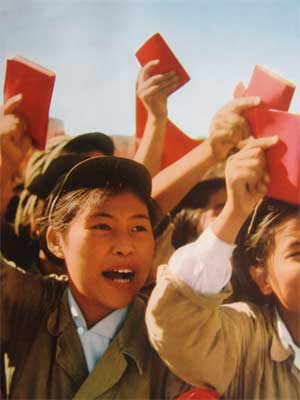
The lesson was not lost and ultimately persuaded the Chinese authorities not to repudiate Mao entirely. Most of his statues and the giant portrait on the Tribune of Tiananmen Square are still in place but virtually his entire dismal legacy has been refuted.
Not only the hierarchy
Which way the wind was blowing for the Asian nation is illustrated by a singular episode, albeit anecdotal but none the less revealing, at a time when the predominance of the absolute leader’s pronouncements was giving way rapidly to a more consensual form of expression, not only within the party and government hierarchies.
In 1978 in a rustic adobe house in the village of Xiaogang, in eastern China’s Anhui province, 18 farmers met in a conclave to commit heresy. After writing their names on a sheet of paper, they signed their document with their own blood, dipping their fingertips and pressing them to the paper.
The document committed them to renouncing the forced collectivization that Maoism had decreed and imposed on the peasants. Tired of going hungry (and even dying of starvation) in the name of the unattainable utopia imposed on them, they swore to die if necessary if they were denied the right to manage the land they worked from dawn to dusk at their peril and their own risk.
When the initiative, which would have automatically meant the death sentence in Mao’s day, reached the ears of the party, there was quite a stir. Deng however took it upon himself to calm the turbulent waters and described it as “a great contribution of Chinese farmers.”
The government took the “oath of Xiaogang,” seriously and in 1982 gave carte blanche to what has been referred to since as the “system of family responsibility for the land.”
Thus, at the insistence of the peasantry, once declared an ally and advocate by Mao but left eventually to starve, China’s reform began. And when it did it took a direction quite different from that envisioned and propagated by the Great Leader.
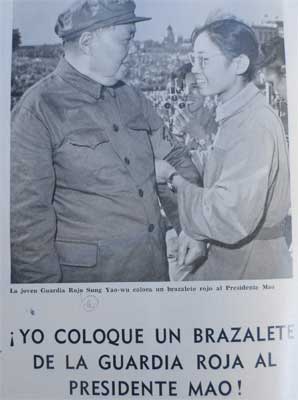
And this brought an end to the peasant communes into which Mao had grouped the small plots and holdings redistributed during the agrarian reform in the wake of the Chinese revolution of 1949.
These communes had reached their peak in the height of the frustrated Great Leap Forward that Mao decreed in 1958 with the avowed purpose of making China a world power. This campaign heralded in the final collectivization of peasant land holdings, together with deforestation and the reconversion of productive plots into makeshift steel mills.
In the end the living conditions of the Chinese peasantry deteriorated and lead to famine from 1960 to 1962 and a toll of 35 to 40 million dead according to statistics collated in China and abroad.
Many Communists were aware that Mao was to blame for this disaster. But the only option available to those few who dared confront him was political and social ostracism, or condemnation, as often happened, as “capitalist dogs” or “revisionist in the service of Moscow.”
Soviet “imperialism” was always feared more than the US variety in China. And basically that is how Chinese society operated up until the death of the Great Helmsman.
In terms of the space available to me here I have had to ignore many nuances, data, considerations and ups and downs in the economy. Nor has it been possible for me to put in a nutshell the ups and downs of the ongoing process of reform.
However, the key to understanding what is happening in China today is to accept the infeasibility of the Maoist proposals. In the end they were neither synonymous with genuine socialism, nor did they bring real prosperity.
Mao of course deserves credit for the creation of a powerful party, the defeat of the forces of both the foreign imperialist invaders and those of local semi-feudal interests together with credit for the unification of the nation into a republic with a new content and a new elan that instilled a renewed sense of national pride in millions of Chinese people.
More is the pity, as we say in Cuba: as time went by what was done by his head was undone by his feet.
Unfortunately –as we Cubans say- it’s too bad that with the passing of time, what he made with his head he destroyed with his feet.
You are a good guy Isidro, but way off base about Mao.
In spite of his flaws, the Chinese people benefited enormously Mao’s rule, and he laid the foundation for the economic and industrial takeoff under Deng (regardless of how you view the post-Mao reforms).
1. Under Mao life expectancy rocketed up in China. From a very recent Stanford University study:
“Indeed, despite the higher death rates associated with the Great Leap Famine of 1959-1961, China’s growth in life expectancy from 35~40 in 1949 to 65.5 in 1980 ranks as the most rapid sustained increase in documented global history. ”
2. Great Leap Forward deaths were largely due to the weather. But even according to Mao’s most vicious detractors such as Jung Chang and Frank Dikotter, mortality rates during the GLF were no higher than that of other developing nations of the time (ie around 2.4 to 2.5% per year).
3. Fertility saw a significant decline under Mao. Yet, the greatest increase in population in China’s history happened under Mao —-obviously because of dramatic improvements in life expectancy and low infant mortality.
4. By the time of Mao’s death, China’s life expectancy of around 65 is still higher than what India has achieved today.
5. Extracted from an article on Harvard University research: “China’s economy has exploded, expanding by 8.1 percent per capita per year on average between 1980 and 2000, while in the same time period India saw a sustained growth rate in income per capita of 3.6 percent–a rate that, while rapid by the standards of most developing economies, is modest compared to China’s.
What accounts for the difference? Part of the answer, the HSPH team suggests, is that dramatic demographic changes in China began decades before those in India. After 1949, China’s Maoist government invested heavily in basic health care, creating communal village and township clinics for its huge rural population. That system produced enormous improvements in health: From 1952 to 1982, infant mortality in China dropped from 200 to 34 deaths per 1,000 live births. Life expectancy rose from 35 years to 68. And under the government’s family planning program, fertility rates dropped by half, from six births per woman in 1970 to three as of 1979.”
http://www.hsph.harvard.edu/review/rvw_summerfall06/rvwsf06_bloom.html
6. Under Mao, literacy increased from around 20 to 80% —higher than most developing nations, including India, today.
By almost any objective measure, Mao was an enormously successful ruler.
Hi, Grady:
Well, to begin with, I’ve been away from Cuba for some time now. So, it is not easy for me to render upgraded approaches, especially when dealing with contacts between segments of Cuban society and foreign organizations, of any kind. The main problem -I guess you are well aware -is the usual reluctancy by the Cuban goverment to allow any initiaives to take root out of it realm of control. I think its’s been already proven by the fact that Cuban farmers were not authorized to receive tractors from private donors. It happened recently. The Goverment fears the introduction of “enemy propaganda”, or whatever, through such endevours. Perhaps at a different level, by talking to ANAP leaders at the top, the Gung Ho initiative might be finally assimilated by the powers that be in Havana. Its just an idea…
Isidro, I wonder if it would be possible to have an international support movement similar to that which was organized to underpin Gung Ho coops, to provide financial capital support for Cuban gung ho-type coops? I know there are many working people in Cuba who would jump at the chance for obtaining such capital.
I assume the Cuban government would be okay with such a movement, but can’t be sure. What do you think?
Isidro, the word “useful” does not come near expressing how important and how encouraging your reply is. We are assisted and stunned. I will go to the website you have given, but first allow me to express my deep appreciation to you. Thank you so very much!
History is sometimes greatly affected by tiny meetings and exchanges of information that often seem to occur by accident. This certainly was the case with the Gung Ho coops. Helen Foster Snow, in 1938, just happened to attend a dinner with a British diplomat who would not shut up about cooperatives.
She had been greatly concerned that the invading Japanese were destroying the industry in Shanghai or shipping it to Japan, and nobody was doing anything about it. She thought about cooperatives that night and, the next morning, she came up with the idea of worker-owned coops to rescue the machines and make them productive farther inland from the coast.
Rewi Alley, a New Zealander friend living in Shanghai, took to the idea and became their first main organizer. (Her husband Edgar Snow and Mao Zedong thought, at first, that the idea had no merit.) Less than two-thousand such worker-owned industrial coops ultimately were founded, but they had enormous importance in putting Chinese back to work and in supplying war material that helped defeat the Japanese, and later bring Mao’s forces to power.
Mao gave a speech in 1943 to party cadre leaders directing that the party focus on converting all party work to such coops (although he did not mention them by name or give credit the foreigner and female who had originated the idea). In 1959, as I understand, he went back to the 100% state monopoly principle of Marxism and collectivized everything, ending direct cooperative ownership by the workers.
I’m saying these things, Isidro, mainly to let HT readers know a bit about the Gung Ho coops, and also how direct worker ownership of the means of production has been proved in the laboratory of history. Father Arizimendiarrieta of Spain must have known about them when, in the early 1950s, he recommended that his followers establish such coops in the Basque region, in the village of Mondragon.
Cheers, and hopefully we will be communicating further!
Hi, Grady:
Sooooooooo sorry for the delay! I was out of town for a few days and then confronted software issues with my PC. But here I am. Back and ready to tell.
As for the role of cooperatives in today’s China I can summarize it by saying that they have taken a back seat amid the country’s overwhelming path of development. Sort of. What I mean is that cooperatives are to a certain extent the government’s tools to resolve some social and mostly regional problems, but given the current competition coops are facing right now from other producers (mostly privates entrepreneurs) they usually find it hard to survive on the classic Gung Ho terms.
Adding to this is the reality that in China the local governments’ performance is usually measured out in their respective GDP figures, meaning that the local powers will usually give priority (in terms of lands, credits and all types of facilities) to real estate moguls and developers, as well as other private producers who will be able to yield big results sooner. This, of course, will happen to the detriment of the usually poorer and ill-equipped cooperatives.
This said, however, the Gung Hos have been developing through ups and downs since the 80s, when Deng Xiaoping administration managed to bring it back to life, after its near burial by Mao Zedong’s policy of collectivization in the 50s.
Curiously enough, it should be said that it has been “Chinese” of foreign ancestry, like Isabel Crook, her son David, and others who have done the most to push the Gong Ho movement in China. Very often, some media and foreigners here have called them the “last real communists” in China.
You can have a wider view of this by accessing their webpage in Beijing:
http://www.gungho.org.cn/en-index.php
Hope thishas been useful to you.
Regards
the time for workers to run great industrial enterprises has passed. look at how mittal steel has taken over soviet and western european steel mills. look at how renault has saved nissan. workers can´t run a company like toyota or nissan. what is not in the above article is this. the great leap forward failed because mao took 60 million young men for small water mitigation projects, dams, while bumper grain crops rotted in the fields and women and older people couldn´t harvest it. resources were also squandered building small steel mills in areas without coal and iron ore. local officials made steel ingots out of confiscated pots, pans and doorknobs to keep mao happy. the ingots were useless. with mass starvation mao sent grain to the soviet union in return for military technoogy. mao had lost most of his power because of this economic disaster so he started the cultural revolution which was more about regaining power and staying emperor than anything else. hunting capitalist roaders and running dogs of capitalism. the so called gang of 4 led by mao´s wife tried to continue in power with these policies but were undermined by deng´s faction. but mao still has his fans. those who benefitted from his policies. in china today there are some appalling social and working conditions similar to victorian britain during the industrial revolution. in a headlong rush to industrialize pollution is out of control. while 500 million have joined the middle class or oligarchy there are hundreds of millions who have not done well. china now has the biggest economy, not the second biggest, and china is already an imperial power with the same kind of foreign policies as that other empire that hugo chavez talks about. as henry kissinger said “states have no morals.” the C.I.A. predicts a soft landing for american power in 15 years. tom englehardt at tom dispatch news predicts a hard landing. time will tell. the center of power moved from europe to north america and and now it is moving to east and south east and south asia. americans hope to maintain a balance of power in their favor by getting india onside. bill clinton dropped the tilt to pakistan. the main problem as i see it in the rise of china is the environmental destruction that is going on in china and all the countries that supply china with food and raw materials. but the chinese are trying to control their pollution problem now as americans and western europeans have done in the past. may you live in interesting times is a chinese curse. britain was the workshop of the world and then it was america and now it is china.
Isidro, thank you for your May 23 comments. As leader of a tiny, nascent socialist movement in the United States, I wonder if you could respond to a few ideas and questions concerning China.
When searching for a new basis for workable socialism–hoping to win over the American people to the concept of a socialist republic democratically established–we learned of the so-called Gung Ho worker-owned industrial cooperatives, which began in 1938 and lasted until they were ended by Mao in, I believe, 1959.
Upon learning of this successful cooperative experience, and upon learning of the highly successful worker-owned industrial and commercial cooperatives of the Basque workers of northern Spain (the Mondragon coops), we concluded that the socialist state need not own all the instruments of production, but could own most significant industry and commerce partially and silently. This theoretically would give primary ownership shares to employee/associates, ensure workplace democracy, and also give private property ownership rights to farmers and the small bourgeoisie and bring them enthusiastically into the socialist project.
This of course would be a profound modification of the traditional Marxian program begun with the Communist Manifesto in 1848. My question to you is whether, from your special viewpoint inside China, the Gung Ho and Mondragon worker experiences might be applied in present-day China, and worker-owned industrial and commercial cooperatives might play a role in further development of Chinese socialism?
Also, would it be possible, under present political conditions, for a tendency to form within the CCP to promote this sort of worker-ownership-entrepreneurial socialism? Please respond.
when china, korea and japan isolated themselves for hundreds of years they fell into economic, technical and military stagnation. when they reversed course they became economic powerhouses. china, korea and japan have the best internet and the most dynamic economies. the internet is the modern equivalent of johannes gutenberg inventing the printing press.
america, canada, australia and western europe stole the educated people from the rest of the world with free inward immigration. east and s.e. asia didn´t encourage much permanent inward immigration but temporary legal and illegal workers were and are permitted in many of these countries. outward migration, even by tourists, brings new ideas home.
there were winners and losers from mao´s policies so mao still has hundreds of millions of fans.
Thanks to all for your comments and words of encouragement:
I decided to submit this article both as a way to shed a bit of light into the debate (is China still socialist; should Cuba partly apply the Chinese model?) and help find a balance between those views abhorring and commending the Chinese model and New China’s history as a whole. I’ve been in this country for 15 years, have met victims of Maoism as well as many other Chinese who have benefitted from the current pro-capitalist reforms (my Chinese in-laws belonging to both groups). So, all in all, a large segment of the local population is living far better than 30 years ago, and enjoying freedoms they could only dream of in the late 70s.
But of course, there’s a dark side to this “miracle” too, as we all know. But it is amid this “darkness,” in my view, that the real path to more democracy and even real grassroots socialism is going to find its culture medium.
The cheap and overexploited labor of the last 34 years have been slowly developing a new sense of and appetite for justice, brewing their social consciousness in their own fashion. The frequent protests and strikes of late have come along with one legal suit after another against greedy managers (both local and foreign). The powers that be are well aware of this explosive situation and therefore are getting ready to act accordingly.
Remember that it was this latest administration, not Mao, the one that abolished taxes on farmers, in 2006 (after they were in force for over 2.400 years!). The New Five Year Plan (2011-15) has been perhaps the more “socialist” of all the plans divised by the Government since the inception of market socialism, in 1979. If it works, the huddled masses might finally find some respite.
And, yes…good idea penning a book about the topic! There’s soooo much still to be said about old China!
This is an excellent article. Thank you so much, Isidro Estrada, for bringing it to us. It allows us to engage in a discussion, and does not hit us over the head with canned, sectarian denunciations that leave the discussion stillborn.
In one respect, comrade Pedro Campos’ stand on China is similar to that of the RCP in the US (a sincere Maoist group led by Bob Avakian). That is, he believes that China is a capitalist country, and that it is a big a monster as the imperialist US. (If I’m not mistaken, both Pedro and Bob denounce Cuba as “state capitalist,” but on that score I might be in error.)
The topic for discussion is and will remain: Is China a socialist country? This is a great question because it opens up the larger question as to: What the heck is socialism, anyway?
Thanks, again, Isidro. I concur with Michael N. Landis that your article should be expanded into a book.
Interesting article, but strange — as if the writer read Campos through some sort contorted lens.
Campos “almost sanctifies the Maoist period”? Sanctifies it?
He “summarizes the legacy of the Great Leader as ‘70% positive and 30% negative’?” Wasn’t he quoting Deng?
Nonetheless, it SEEMS that the writer is in agreement with the much broader point (whether the blame is placed more on Mao or Deng or what): that the Cuban elite is updating it’s model along the line of another non-socialist failed state.
Makes for a useful debate.
Thank you for your perceptive political, economic and social analysis of Chinese history over the last half of the 20th Century! I wonder what lies ahead for China during the next half-century? Although I tend to agree on you, that the 70%, 30% positive/negative assessment should be reversed, in the end such arbitrary percentages have little meaning. Out of all this suffering, thanks to replacing doctrinaire policies with more pragmatic ones, China has emerged as a major player on the international scene. On the other hand, if it attempts to become another empire, superceding the U.S.A., it will fall victim to the ills which always befall empire. Lets hope they learn–that we all learn–something from history. Your article should be incorporated into an anthology on 20th Century World History or, better yet, itself expanded into a book.
Great article. Well-written.